Ambient Streamers Are Changing the Rules of CTV
In our Q2 Streaming Pulse study, we analyzed the viewing habits of one thousand Americans, from when and how they stream content to why. One of the key things we asked about was how they approach streaming with regard to other activities, such as doing chores or working.
For many Americans streaming video has transcended entertainment to become the background of their daily lives. Four out of five consumers in the Q1 Pulse survey (79%) said that they put on streaming video while planning to do something else, such as working, cooking, or doing chores, and the activity was near-universal for anyone under the age of 45. The idea that CTV competes with linear TV is outdated in that regard; CTV instead competes with Spotify, radio, and podcasts as the soundtrack to consumers’ daily lives.
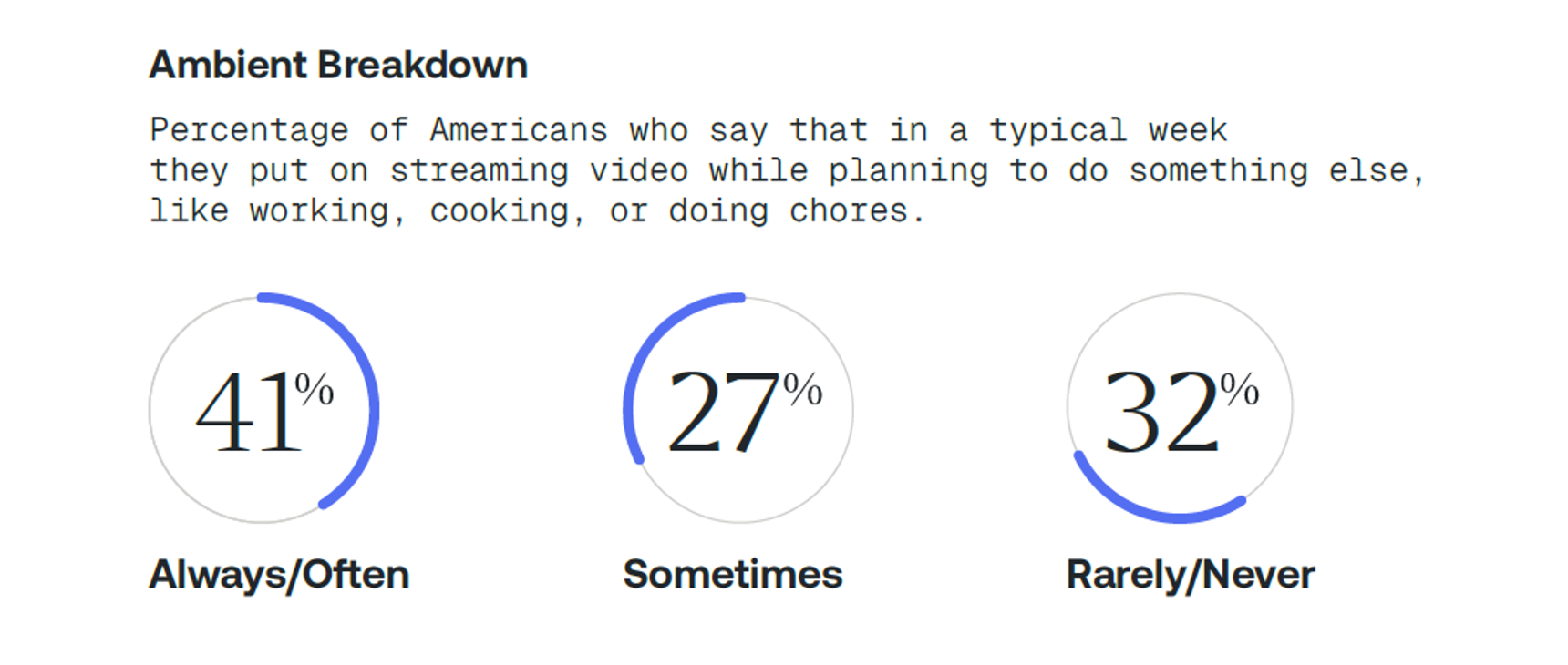
Things really became interesting when we split our audience based on these streaming preferences: You can break the American streaming audience into three groups, based on their approach:
- Ambient Streamers, who say they either Always or Often put on streaming video while planning to do something else,
- Appointment Streamers, who say they Never/Rarely do so, and
- Everyone else, who end up being a mix between the two.
Ambient Streamers make up 41% of the American viewing audience, and Appointment Streamers make up another 32%, meaning that three out of four Americans falls into one of these groups.
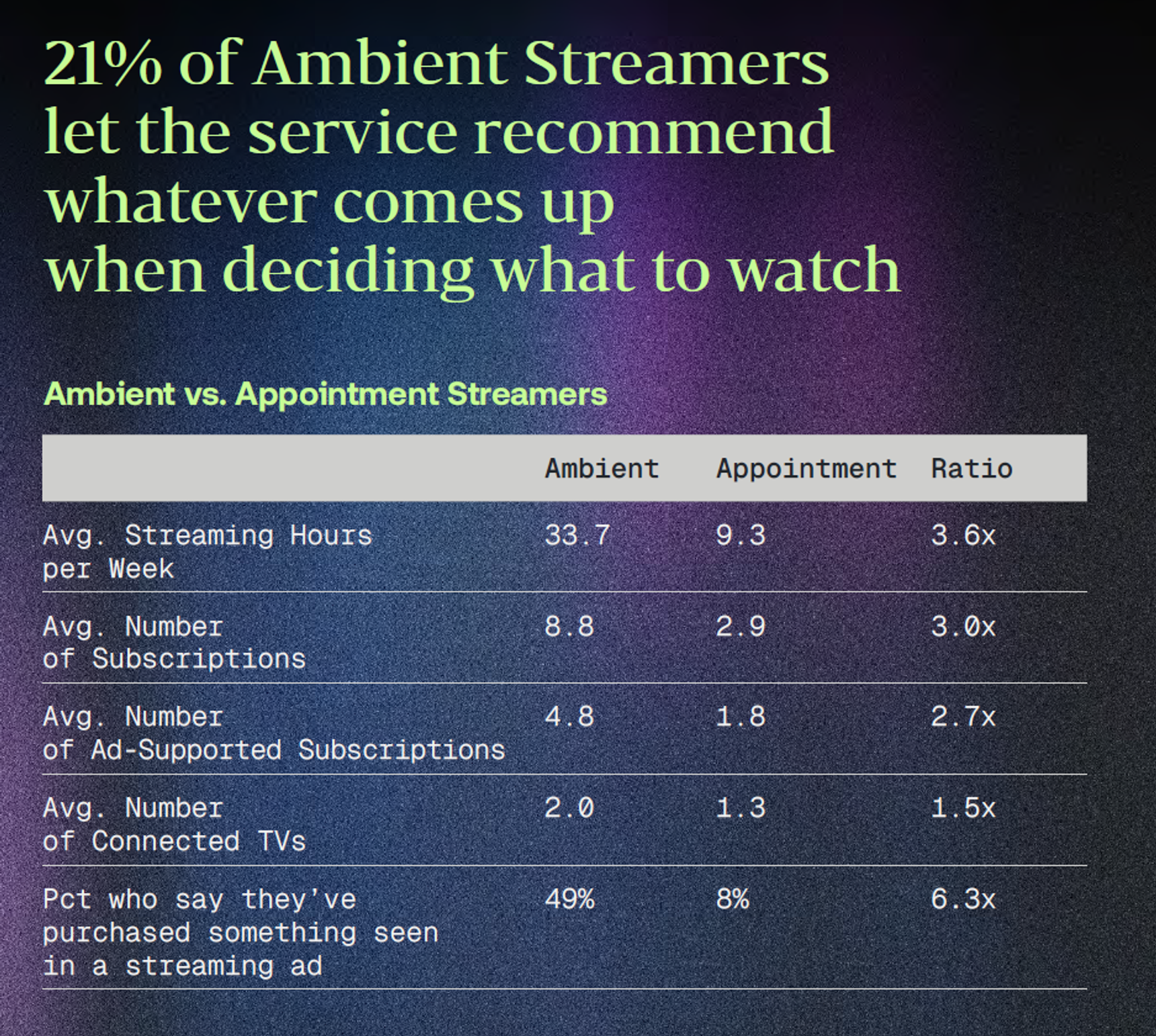
Ambient viewers watch substantially more per week, and are much more likely to be watching streaming video during the day, particularly between 9am and noon. Meanwhile Appointment streamers tend to do their watching in the afternoons and evening, particularly prime time - old habits die hard.
Content Discovery
More interesting however is how these groups come by content: Ambient streamers are more likely to let a streaming service make recommendations to them or just leave things running and let whatever’s on next be chosen by algorithm. The two groups are just as likely to carefully pick the shows they watch, but only Ambient Streamers are willing to just watch whatever their platform recommends.
Appointment Streamers in contrast are less likely to search for new shows and more likely to put on the same things they always do. Think of this process less as appointment-by-curation and more appointment-by-habit. These are the same habits that made shows like The Office a streaming juggernaut.
For marketers, this has interesting knock-on effects. Nearly one third of advertisers say they aren’t confident they’re capturing viewer attention during CTV ad breaks, and Ambient viewing is likely to reinforce this belief, even if Ambient Viewers will see more ads and are more likely to make a purchase as a result. What Advertisers need to consider here is how to match creative messaging for each viewer category. In-show and mid-stream creative and pause screens are more likely to be effective for Appointment Streamers, while home screen ads and units on or near recommendations may hit harder for Ambient Streamers. Contextual relevance will also be a key factor in catching viewer attention, drawing them back to the stream for a key moment.
One important thing to note is that while Ambient Viewing skews younger, these consumers aren’t just younger viewers who second screen. On average Ambient viewers eat four to five meals per week while watching Streaming Video, compared to only 2 for Appointment viewers, and Ambient viewers are more likely to watch during lunch. That gap holds for older Americans as well — even a 55 year-old Ambient Streamer is eating 4.5 meals a week while watching Streaming video.
For Ambient Streamers — and younger streamers generally — streaming is more likely to be something they throw on or do when they need a quick break. Comparatively for older and Appointment Streamers, the activity is more goal-driven, i.e. “I am here to watch this show.” Both groups are likely to pick shows that fit the amount of time they have to watch (speaking to an interest in shorter content), which suggests that Ambient Streamers are picking something to fill time, while Appointment Streamers have allocated time for the thing they planned to watch.
The Key Takeaway
For four out of ten US adults, streaming is the audio-visual layer of cooking, eating, working from home, getting ready in the morning, commuting on mass transit, and winding down late at night. It’s an activity which has permeated every age group, producing nearly 4x more streaming hours per week and opportunities to reach consumers through every part of their day. While older consumers may still treat CTV the way they treated broadcast, those habits will continue to shift as the current group of Ambient Streamers ages.
Want to know more about the Olyzon Streaming Pulse study? Contact us to schedule a presentation: sales@olyzon.tv