How American Households Really Watch CTV Together
In our Q2 Streaming Pulse study, we analyzed the viewing habits of one thousand Americans, from when and how they stream content to why. One of the key things we asked about was how they watch streaming content with other people in their household - particularly partners and children.

By Nielsen’s measurement, streaming accounted for nearly half of all US television viewing time, with more than half of that streaming done through a Connected TV (61%). As streaming has become the primary way Americans watch, CTVs have ensured that they’re doing so on the largest screens in the household. As a result, streaming is no longer the solitary activity it was in the early days of YouTube: CTV viewing is often done with a partner or family.
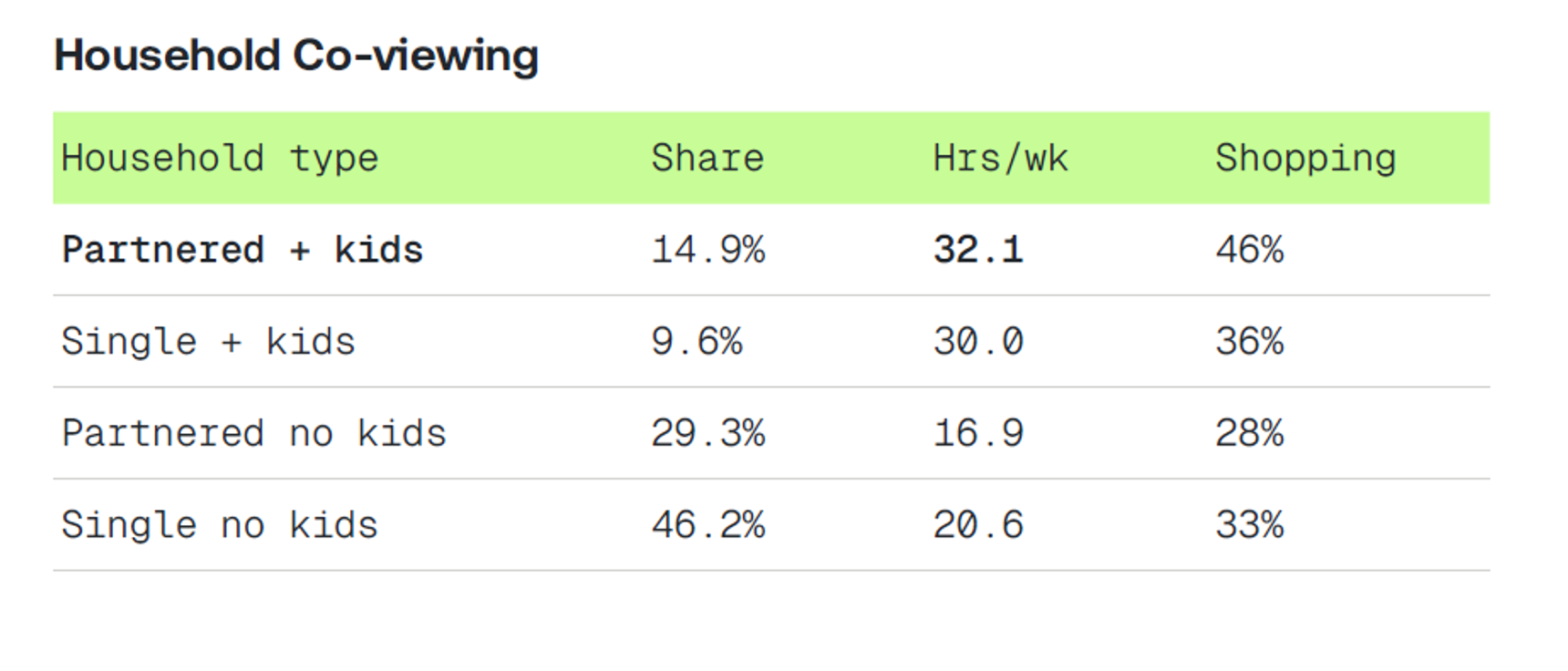
Roughly half of US adults (49%) have a co-viewing relationship with at least one other household member - 41% with a partner, and 23% with one or more kids. Timewise, partner co-viewing tends to account for 43% of all streaming hours, while kid co-viewing makes up around 32%. But there’s a catch: the high amount of second screen device usage during animated, family, and children’s content points to the second screen being a key factor during co-viewing with children.
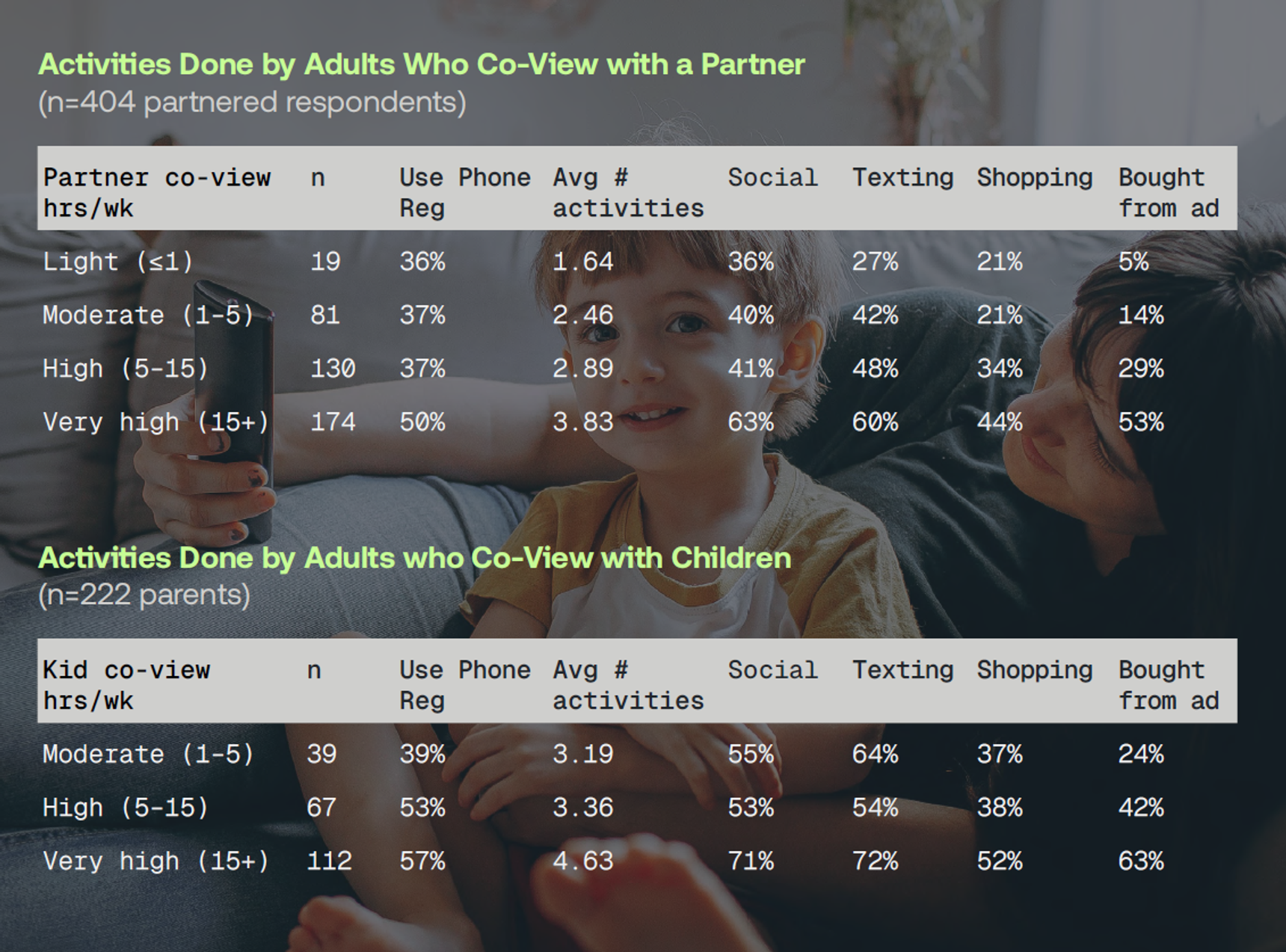
So what does this mean? Well it means that Co-viewing mostly means “Co-presence” for the majority of adults. Across every group we looked at, more co-viewing time produced more second screen activity per hour. That means less focused, shared attention among adults when co-viewing. This was especially true for adults co-viewing with kids, who are more likely to do more activities on their phones while watching and more likely to shop and have purchased something they saw in an ad.
When it comes to the decision on what to watch when co-viewing, the result is more often collaborative: 38% of adults say it’s a decision made together, though another third (33%) say that the kids pick most or all of the time. With partners, the decision is collaborative most of the time (53%), though when it’s not men are more likely to be picking what to watch than women.
The Impact for Marketers
The split attention is a boon for marketers: Those adults living in family households (with a partner and children) may have split attention during co-viewing, but they’re also generating the most streaming hours, doing the most second-screen activities while streaming, and are the most likely to shop. Getting good value out of co-viewing means finding ways to grab divided attention, areas where good creative execution and better content selection can help.
Want to know more about the Olyzon Streaming Pulse study? Contact us to schedule a presentation: : sales@olyzon.tv